How to reduce routesetting costs without setting less
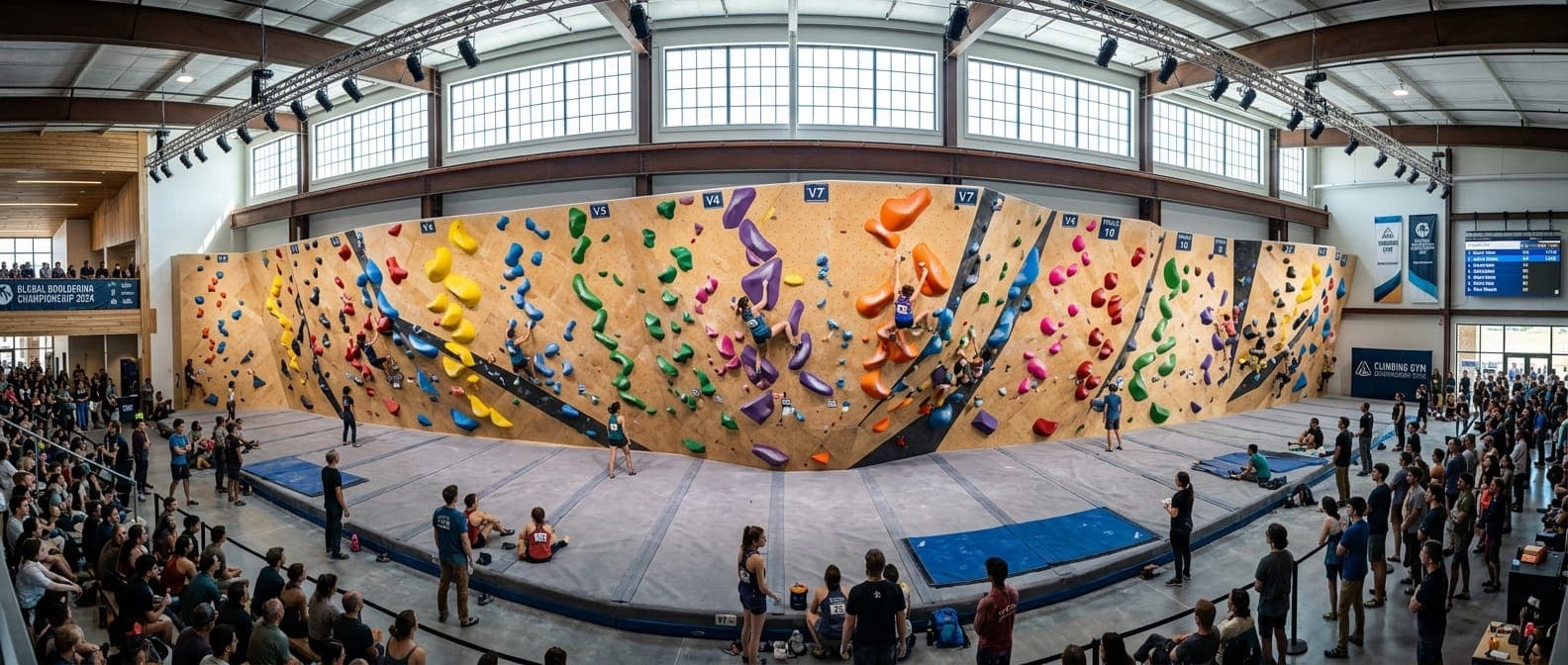
Routesetting is the product a climbing gym sells. Members do not pay for the walls, they pay for what is bolted to them this month. That is why the obvious way to spend less on setting, resetting less often, is also the one your members notice first.
The better target is the cost of each boulder, not the number of boulders. This guide shows where the money goes, how to work out your own figure, and five places to bring it down.
Where the time goes on a reset day
Setter time is almost the whole budget, so start by splitting a reset day into its steps:
- Planning the set. Deciding how many boulders, which grades and which styles the sector needs.
- Stripping. Taking the old boulders down and sorting the holds.
- Washing. Getting chalk and rubber off the holds that go back into rotation.
- Designing and bolting. Choosing holds, inventing the moves and putting them on the wall.
- Forerunning and tweaking. Climbing every boulder, then turning, swapping and moving holds until it works.
- Grading and tagging. Agreeing the grade and labelling the start and the top.
Stripping, washing and tagging cost roughly the same whatever you set. The steps that swing from one day to the next are designing and tweaking, and those are the ones worth looking at.
Work out your own cost per boulder
You do not need industry averages. You need one honest number from your own gym:
Cost per boulder = (setter hours on the reset × what an hour of a setter costs you) ÷ boulders set
Use the full cost of an hour, with social charges or contractor fees, not the hourly wage. As an example of the arithmetic: four setters working a seven-hour day is 28 setter hours. If they put up 24 boulders, each boulder took a little over an hour of paid time. Multiply that by your hourly cost and you have your figure.
Track it for a month before changing anything. If you can, note how the hours split between the steps above. Most head setters are surprised by how much of the day goes on things that are not setting.
Five ways to bring it down
1. Arrive with the set already planned
A setter standing on a ladder deciding what to build is the most expensive way to design a boulder. Decide the grade spread, the styles and the holds before reset day. Planning at a desk the day before costs the same hour, but it does not hold up three other people and a closed sector.
2. Start from a finished boulder, not a blank wall
Inventing every boulder from nothing is where the design time goes, and it is also why a team's setting starts to look the same after a few months. A library of finished boulders changes the job: the setter picks one that fits the wall angle and the grade, builds it, and then adapts it. This is what Makig is for. Each boulder comes with its hold positions on a numbered grid and a 3D view of the wall, so the setter who builds it does not have to be the one who designed it.
It does not remove forerunning. Someone still has to climb the boulder and adjust it for your wall and your members.
3. Set from the holds you already own
A good idea that needs a set of holds you do not have is an expensive idea. Before planning, know what is clean and available. If you plan from a library, filter it by the hold brands in your storage room so every boulder you open can actually be built.
4. Shorten the tweaking loop
Tweaking takes long when a boulder lands two grades away from its target, or when setters disagree about what the target means. A shared written description of each grade helps more than any tool. We cover that in how to keep boulder grades consistent.
5. Fix the unglamorous steps
Small habits add up across a year of resets:
- Strip the sector at closing time the night before, so the setting day starts with setting.
- Keep a washing rotation so clean holds are waiting, instead of washing on reset day.
- Sort holds by type and size, not by where they happened to land.
- Keep bolts, drills and bits on a cart that moves with the team.
- Print tags from one template so nobody designs labels at the end of the day.
What about guest setters?
A guest setter brings two things your team cannot give itself: movement ideas from outside, and a few days of training for your own setters. Both are worth paying for now and then. As a way to get everyday variety it is costly, because the fee, travel and accommodation are spread over a single set that comes down a few weeks later.
A sensible split is to book guests for events and for teaching, and to use a library for the week-to-week variety. For reference, the full Makig library costs €1,000 per gym per year, or €100 billed monthly. The details are on the pricing section.
What not to cut
Some savings cost more than they save:
- Forerunning. An untested boulder is a boulder nobody enjoys, or one that hurts somebody.
- Safety checks. Fall zones, spinning holds and loose volumes are checked on every set.
- Setter rest. Tired setters work slower and get injured, and a setter off work is the largest cost there is.
In short
Measure your cost per boulder, find out which step eats the day, and attack that step. For most teams it is the design time, and the cheapest fix is to stop starting from a blank wall. If you also want to know whether you are resetting at the right pace, read how often a climbing gym should reset its boulders.
Set your next reset from finished boulders
Makig gives your setting team a library of boulders to filter by grade, wall angle and hold brand, each with a 3D view and setting instructions. Your first 5 are free.